
By Dapple Landscape Design | Updated August 2026
Bondi is one of the most physically demanding places in Sydney to get a garden right, and one of the most rewarding when it's done properly.
Salt-laden wind comes straight off the beach, the soil is sandy and fast-draining, most of the housing stock is semi-detached or terrace-style on tight, narrow blocks, and Bondi Beach itself sits inside a Heritage Conservation Area governed by one of the most detailed Development Control Plans in Sydney. A planting palette or layout that works beautifully in Parramatta or the Hills District can fail within a season here, or run straight into a heritage or coastal hazard requirement nobody warned you about.
At Dapple Landscape Design, we design landscapes for Bondi and the wider Eastern Suburbs with all of this built into the plan from day one, not fixed after the fact. Contact us today or call 1300 DAPPLE (1300 327 753) to talk through your site before you commit to a layout.
Quick answer
A garden that succeeds in Bondi is designed around four things at once: salt and wind exposure, sandy free-draining soil, a small or narrow block, and, depending on your street, heritage or coastal hazard controls. Waverley Council applies specific deep soil and landscaped area requirements, and even street tree planting in Bondi follows council's own coastal exposure zoning. Getting all of this right from the start avoids expensive replanting, redesign and DA delays later.
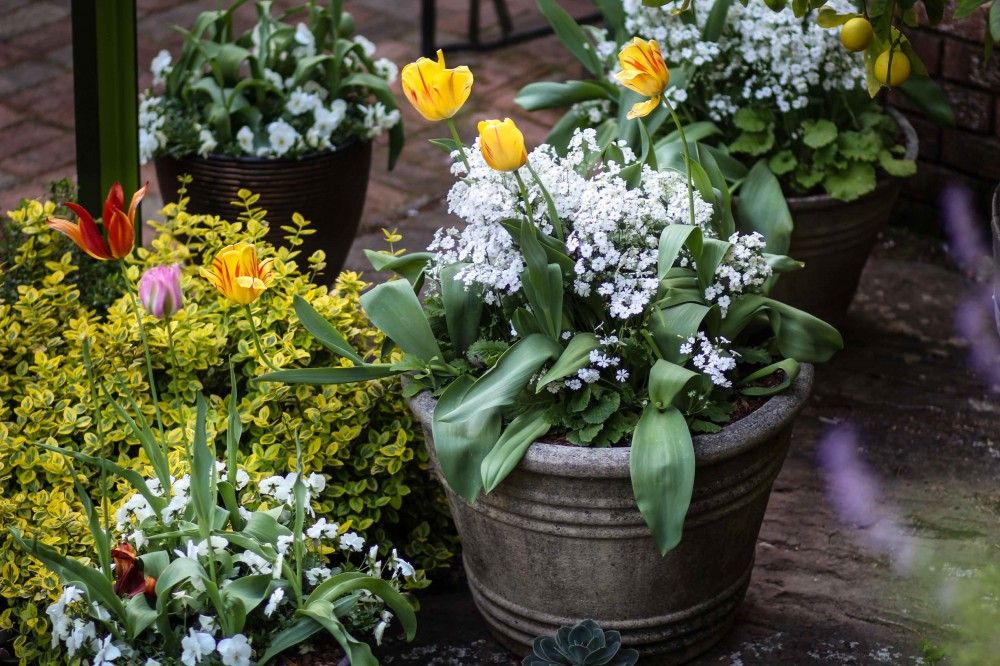
Coastal-style planting from one of our Sydney projects.
Why Bondi Gardens Are Different From the Rest of Sydney
Four overlapping conditions shape almost every garden decision in Bondi, Bondi Junction, Tamarama and Bronte. Rather than treat these as background context, we design against each one specifically.
Salt & Wind
Direct salt spray carried well past the boundary on strong onshore wind, particularly on corner sites.
Sandy Soil
Fast-draining and low in organic matter, drying out quickly and losing nutrients faster than clay-based soils inland.
Small Blocks
Semi-detached and terrace lots with limited side access, governed by Waverley's terrace-specific DCP controls.
Heritage & Hazard
Bondi Beach sits inside a Heritage Conservation Area, and some streets fall within mapped coastal hazard zones.
On a Bondi terrace, the front third of the garden usually does the hard work.
It absorbs wind and salt so the rest of the block can be softer, greener, and more sheltered. Design the front line first, then let it protect everything behind it.
Council's Own Coastal Exposure Zoning, and What It Tells Us
Most landscape design pages talk about "coastal exposure" in general terms. Waverley Council has actually mapped it, in detail, for street tree planting purposes, and the zoning tells you a great deal about what's realistic for a private garden nearby, even though it wasn't written for that purpose.
Council's own planting strategy divides the Waverley area into distinct zones based on topography, soil and coastal exposure. Bondi Beach, North Bondi and the cliff tops from Dover Heights down to Bondi's headlands fall into what council classifies as the most exposed category, directly hit by salt-laden wind, with thin, sandy, low-organic-matter soils often sitting over sandstone bedrock. Moving inland just a few streets, into the Bondi basin itself and towards Tamarama and Bronte, the exposure eases slightly but still dominates plant performance. Further inland again, in the more sheltered valleys around Bronte and Queens Park, conditions improve markedly.
Designer rule: your distance from the immediate coastline within Bondi changes what's achievable, not just what's advisable. A courtyard two streets back from the beach can support a noticeably wider planting palette than a front garden facing directly onto it.
Council's data also confirms something worth knowing if you're working around established trees: species like New Zealand Christmas Bush, once heavily planted along the Bondi coastline, have struggled and declined under sustained salt exposure over recent decades, while species such as Coastal Banksia, Norfolk Island Pine and Bracelet Honey Myrtle have consistently performed better in the same conditions.
What Actually Grows Well in Bondi
Rather than a generic "coastal plants" list, here's how we group planting by how much exposure a given part of the block actually gets, since exposure changes dramatically within the same property.
Front line, direct exposure
Coastal Rosemary, Lomandra, Banksia
Handles
Direct salt spray
Position
Front boundary
Role
Protective front line
Westringia (coastal rosemary), lomandra and banksia take direct salt spray and strong wind without complaint. These form the protective front edge on most Bondi front gardens, and banksia in particular has a strong, council-documented track record of surviving right on the coastal frontline.
Mid-zone, sheltered by the front line
Agaves, Succulents, Native Grasses
Handles
Filtered wind
Position
Mid-garden
Role
Structure, low water
Once the front line breaks the wind, architectural succulents such as Foxtail Agave and ornamental grasses can perform well, adding structure without needing constant water.
Rear courtyard, most sheltered
Softer Foliage & Feature Planting
Handles
Little to no salt
Position
Rear courtyard
Role
Colour, texture
Rear courtyards, shielded by the house itself, can support softer, more decorative planting that would struggle at the front. This is usually where we introduce colour and finer foliage texture, drawing on species also seen around nearby Marks Park and the Bondi to Bronte coastal walk for visual consistency with the local landscape.
For general guidance on matching plants to Sydney's conditions more broadly, see our guide to planting for Sydney weather. If low water use is also a priority, our drought-tolerant landscape guide covers soil preparation and irrigation strategy in more depth, and our succulent garden design guide goes further into plant form and texture for exposed, low-water sites like Bondi's.
Landscape Plans and Waverley Council: What You Need to Know
If your project needs a Development Application or Complying Development Certificate, your landscape plan is assessed against the Waverley Development Control Plan (DCP) 2022, alongside your architectural drawings.
Requirement
Standard housing (Part C1)
Multi-dwelling (Part C2)
Watch for
Open space
40% of site area
Landscaped area
Deep soil zone
Waverley's DCP also includes a dedicated section for semi-detached dwellings and terrace-style development (Part C1.13), covering side setbacks (the outer, non-shared wall is generally set back a minimum of 900mm from the boundary), how internal courtyards can be formed against a side boundary, and streetscape controls specific to terrace groups.
If your project affects any tree on site, on a neighbouring property, or a street tree within 4 metres of your boundary, Council requires a separate tree assessment alongside your Landscape Plan, with any approved tree work carried out by a minimum AQF Level 3 arborist. Waverley's DCP also requires pools and spa pools to be located at the rear of the property, not within a side setback between dwellings, and screened if visible above ground.
We're experienced with Waverley Council's DA requirements, including the deep soil zone, terrace-specific and tree canopy provisions above, and we prepare landscape documentation designed to answer these requirements clearly the first time. For more detail, see our landscape DA plans page or our guide on whether you need a DA landscape plan.
Source: Waverley Development Control Plan 2022, Part C: Residential Development (Waverley Council).
Heritage and Coastal Hazard Considerations Specific to Bondi
Two additional layers apply in parts of Bondi that don't come up in most Sydney suburbs, and both can change what your landscape plan needs to include before you've chosen a single plant.
Heritage Conservation Areas
Waverley currently has 17 Heritage Conservation Areas (HCAs), and Bondi Beach itself, including the Pavilion, is one of them, recognised for its historic, social and aesthetic significance as a cohesive beachside streetscape, with some land grant boundaries in the area dating back to the 1810s. Being inside an HCA doesn't mean every part of a property is heritage-protected, but development within one still needs to respect the area's character in form, scale, materials and siting. Section B8 of Waverley's DCP sets out what's required when developing a heritage-listed property, and a Planning Certificate is the definitive way to check whether heritage controls apply to a specific address. Tree pruning or removal on a property within an HCA, or on a heritage-listed property, also follows a separate process to a standard tree permit.
Coastal hazard and foreshore controls
Properties within Waverley's mapped coastal vulnerability area or foreshore scenic protection area have an additional requirement: a Statement of Environmental Effects for these sites must include a coastal hazard assessment addressing the NSW Government's SEPP (Resilience and Hazards) 2021. This applies on top of, not instead of, the standard landscape and DCP requirements above, and it's a detail that's easy to miss if a DA is prepared without checking a property's specific mapping first.
Practical takeaway: before finalising a layout for a Bondi property, it's worth confirming whether the site sits within a Heritage Conservation Area or a mapped coastal hazard zone. Both can shape what's achievable well before council formally assesses a DA, and finding out late is one of the most common causes of redesign and delay we see.
Not sure what your block actually needs?
Every Bondi block is different, exposure, soil depth, existing trees, heritage status and coastal mapping can all shift the plan.
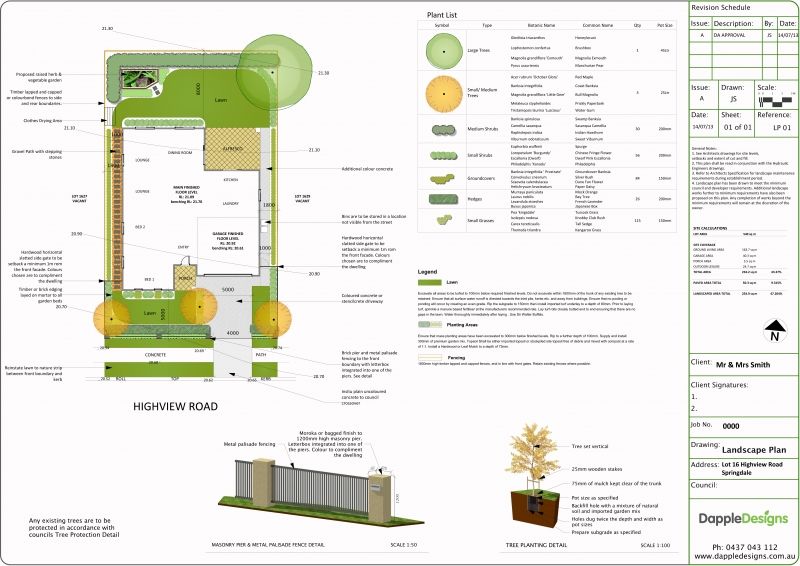
Example of a council-ready landscape plan.
Designing Small and Narrow Bondi Blocks
Getting a garden that feels open and usable out of a small footprint is more about layout and sightlines than square metreage. We design courtyards, side pathways and rear spaces in Bondi and Bronte terraces to do several jobs at once: dining, lounging and storage, fitted into a space that doesn't feel cramped. For more, see our guide to landscape design for small and narrow blocks.
Where a side boundary wall is involved, as it often is on a terrace, screening and privacy planting matter more than they would on a freestanding home. Our guide to screening plants for privacy covers species that hold up well in these tighter, more overlooked spaces.
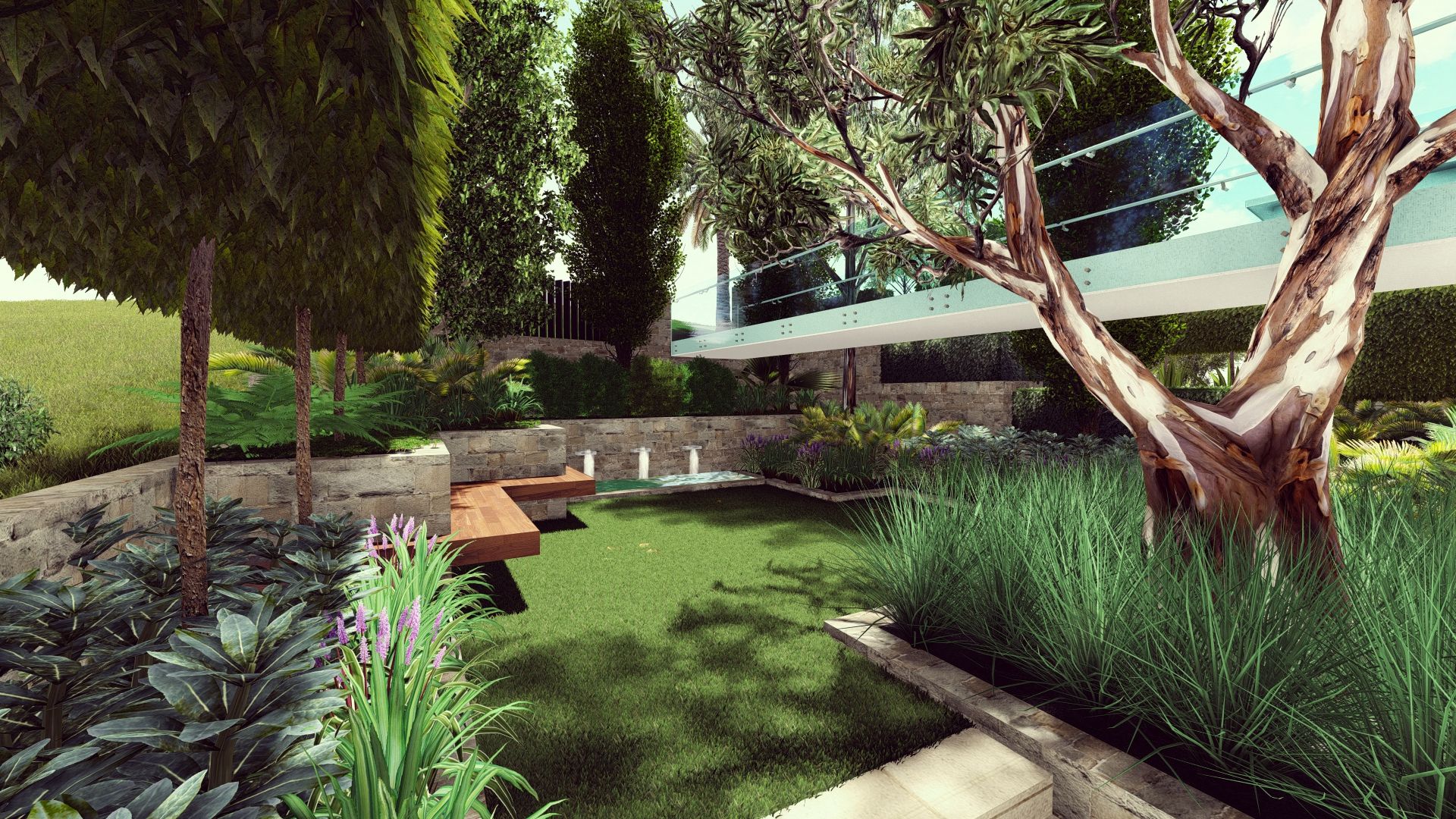
Front garden design on a compact block, one of our Sydney projects.
Pool and Courtyard Landscaping in Bondi
Pool landscaping close to the coast has its own set of pressures: reflected heat off paving, restricted garden bed widths on tight blocks, and plant litter that can end up in the water. We choose planting around Bondi pools that limits leaf drop and avoids sharp or spined species near path edges and pool coping. For general principles, see our pool landscaping Sydney guide.
Six Mistakes We See in Bondi Gardens
01
Planting the whole garden with the same exposure in mind
The front of a Bondi block and the rear courtyard can be almost different climates. Treating the whole site as equally exposed means either the front burns or the back is planted too conservatively.
02
Ignoring how fast sandy soil drains
A genuinely salt-tolerant plant can still struggle if irrigation and soil preparation don't account for how quickly Bondi's sandy soil loses water and nutrients.
03
Designing the layout before checking the DCP's deep soil requirement
On a small block, the 50% deep soil zone requirement can meaningfully shape where a pool, deck or extension can go. Finding this out after a concept plan is drawn means starting again.
04
Treating a terrace like a standard freestanding block
Party walls, shared boundaries and Waverley's terrace-specific setback rules mean a Bondi terrace garden needs a different starting approach to a house with clear space on all four sides.
05
Choosing a feature tree without checking its record in coastal conditions
Council's own long-term planting records show certain popular species consistently declining in Bondi's frontline coastal areas while others thrive in the same conditions. Worth checking before committing to an expensive feature tree.
06
Not checking heritage or coastal hazard status before designing
A property inside Bondi Beach's Heritage Conservation Area, or within a mapped coastal hazard zone, may face requirements that aren't obvious from the street. Confirming this via a Planning Certificate before finalising a layout avoids a costly redesign later.
Already made one of these mistakes, or want to avoid them from the start?
Suburbs We Service
Bondi, Bondi Junction, Bronte, Tamarama, Rose Bay, Vaucluse, Woollahra, Darlinghurst, Surry Hills, Waverley, Woolloomooloo, Edgecliff, Kingsford, Eastlakes, Daceyville, Maroubra and La Perouse, and the wider Eastern Suburbs of Sydney, including Coogee, Randwick and Paddington.
What We Offer in Bondi and the Eastern Suburbs
- Landscape DA and CDC plans prepared with Waverley Council's requirements in mind, including heritage and coastal hazard considerations where relevant
- Concept garden design with an onsite consultation
- Salt and wind-tolerant planting plans matched to exposure zones across your block
- Small and narrow block layouts for terrace and semi-detached homes
- 3D modelling for larger or more detailed projects
- Hardscape plans and materials selection suited to sandy, free-draining sites
- Construction details and landscape specifications
- Pool landscaping and courtyard design
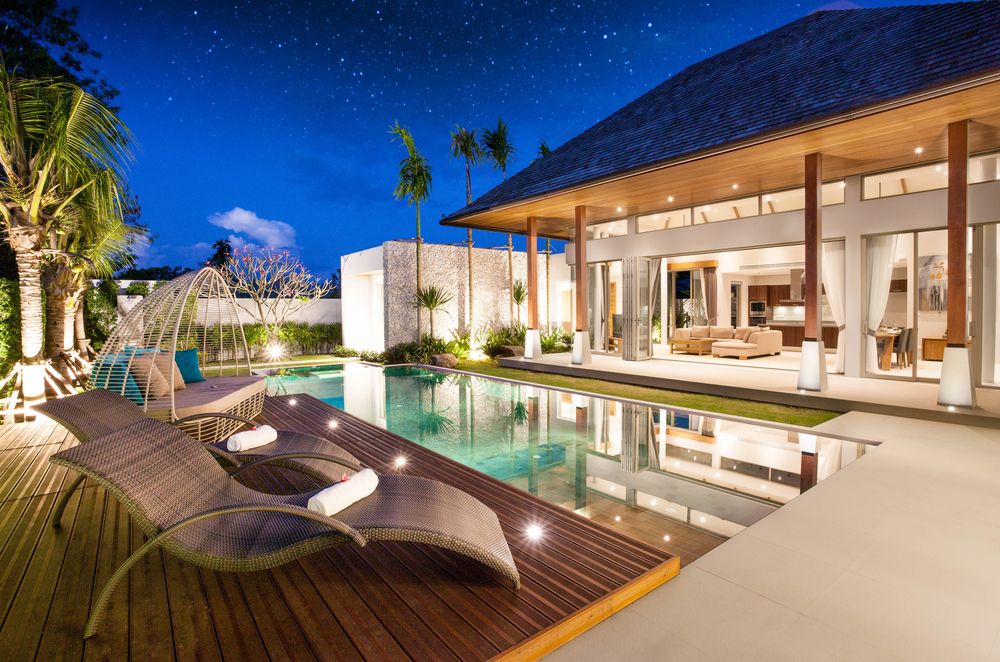
Pool and garden design, one of our Sydney projects.
Frequently Asked Questions
Do I need a landscape plan for a DA in Bondi or the Waverley LGA?
Most residential DAs in the Waverley Council area that involve new dwellings, significant alterations, pools, or works affecting trees will need a landscape plan as part of the submission. Council also applies specific deep soil and landscaped area requirements, and the figures differ depending on whether your project falls under low-density (Part C1) or multi-dwelling (Part C2) controls.
Is my Bondi property in a Heritage Conservation Area?
Possibly, Bondi Beach itself, including the Pavilion, is one of Waverley's 17 Heritage Conservation Areas. The clearest way to confirm whether a specific property is affected is to order a Section 10.7 Planning Certificate from Waverley Council, which will show whether heritage or HCA controls apply, alongside checking Schedule 5 of the Waverley LEP.
What plants actually survive close to Bondi Beach?
Plants with tough, waxy or narrow leaves generally cope best with salt spray, coastal rosemary (Westringia), lomandra, banksia and other native coastal species are reliable choices for direct exposure. Council's own long-term planting records back this up, species like Coastal Banksia and Bracelet Honey Myrtle have consistently performed well in frontline coastal conditions, while some once-popular species have declined under the same exposure.
Does exposure really vary that much within one Bondi street?
Yes, significantly. Waverley Council's own coastal planting zoning shows a clear gradient from the most exposed frontline coastal areas right on the cliff tops and beachfront, through to noticeably more sheltered basin and valley areas just a few streets inland. The same principle applies within a single property, the front of a block is typically far more exposed than a rear courtyard shielded by the house itself.
Can you design for a small terrace or semi-detached block?
Yes, this is a large part of what we do in the Eastern Suburbs. Waverley Council's DCP has dedicated controls for semi-detached and terrace development, and a garden plan needs to be designed around those constraints rather than treated like a standard freestanding block.
How much of my Bondi block needs to stay as deep soil?
Under Waverley's DCP, for standard low-density housing at least 20% of your total site area must be landscaped area, with at least half of that being deep soil zone. For multi-dwelling housing the landscaped area requirement rises to 30% of site area, with the same 50% deep soil requirement applying within it.
Do you offer onsite consultations in Bondi?
Yes. We also offer online consultations for anyone who prefers it, or where site access is limited.
Landscape designer perspective
Bondi Doesn't Need a Generic Coastal Garden. It Needs a Zoned One.
Most "coastal garden" advice treats an entire property as one exposure condition. In Bondi, that's rarely true. The front line takes the brunt of the wind and salt; the mid-zone benefits from that shelter; the rear courtyard, protected by the house itself, can be a genuinely different growing environment. Layer heritage or coastal hazard status on top, and the property needs a plan built for its specific address, not a generic coastal template.
The best Bondi gardens are designed in zones, checked against council's specific controls, not assumed from a postcode. Get that structure right and the rest of the design, materials, layout, feature planting, has room to work properly.
Planning a Garden or DA Landscape Plan in Bondi?
We design for the salt, wind, sandy soil and small blocks that make Bondi different, and we're experienced with Waverley Council's DA requirements, including heritage and coastal considerations.
Discuss Your Garden Call 1300 DAPPLE
1300 327 753
Explore our project gallery to see the quality of our work, or read our Google reviews. You can also browse our Plant Finder to compare species for coastal conditions, or see our landscape design packages to understand what's included at each level.