By Dapple Landscape Design | Updated August 2026
The best tree for a small garden is not necessarily the shortest tree. It is the tree whose mature canopy, roots, foliage and growth habit fit the space without creating an ongoing pruning problem.
A five-metre tree with a five-metre canopy may consume more usable garden space than an eight-metre tree that naturally stays only three metres wide.
That distinction matters in Sydney, where terrace gardens, compact backyards, courtyards and narrow suburban blocks often require trees to provide shade, privacy, flowers or vertical structure without overwhelming the property.
Quick answer
Some of the best small trees for Sydney gardens include Japanese Maple, Magnolia 'Little Gem', NSW Christmas Bush, Water Gum 'Luscious', Forest Pansy, Crepe Myrtle, Frangipani, Bay Tree, compact citrus and Blueberry Ash. The right choice depends on mature width, sunlight, heat, frost, soil volume and what you need the tree to do.
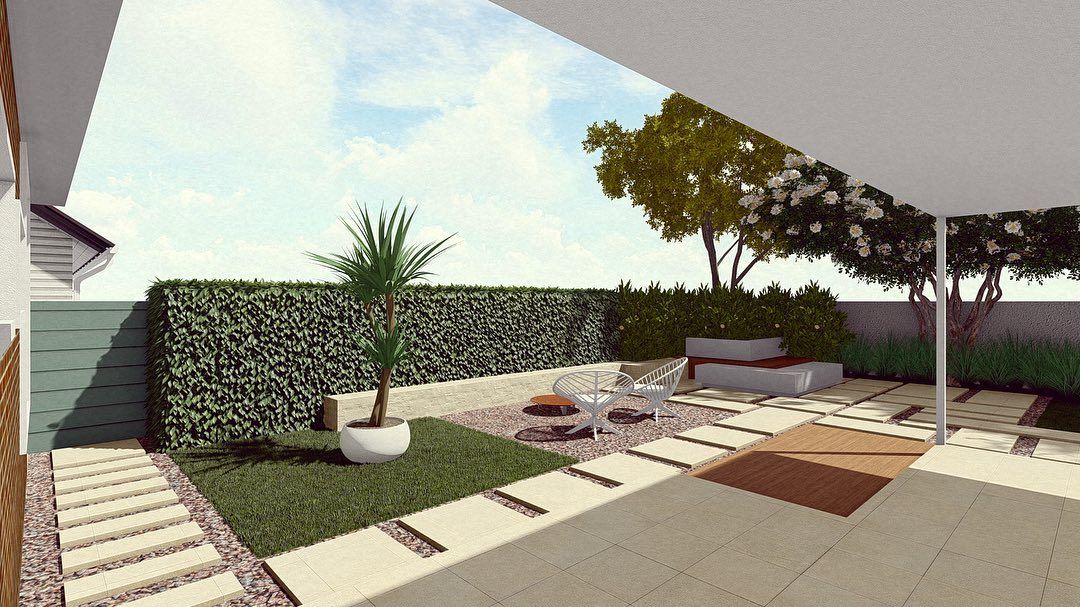
A well-positioned tree can add height and depth to a compact garden without filling the entire ground plane.
In a small garden, canopy width is often more important than tree height.
A naturally narrow eight-metre tree can sometimes fit a constrained property better than a five-metre tree that spreads five metres across.
What Makes a Tree Suitable for a Small Sydney Garden?
Tree selection should start with the mature tree rather than the specimen you see at the nursery.
Space
Mature Canopy
Check both eventual height and width. Width often determines whether paths, windows and entertaining areas remain usable.
Function
Why Is It There?
A tree chosen for summer shade requires a different canopy from one used for privacy, flowers, fruit or a focal point.
Site
Microclimate
Western heat, coastal exposure, frost, reflected heat and shade between buildings can completely change tree performance.
Available canopy space + sunlight + soil volume + tree function + maintenance tolerance = the right small tree.
15 of the Best Trees for Small Gardens in Sydney
The dimensions below should be treated as design guides rather than guarantees. Mature size varies with cultivar, climate, soil, irrigation and pruning.
01 · Excellent all-round compact evergreen
Magnolia 'Little Gem'
Magnolia grandiflora 'Little Gem'
Typical mature size: about 4m high × 2.5m wide
Best for: Evergreen structure, feature planting, narrow gardens
'Little Gem' provides the glossy evergreen foliage and large white flowers associated with Southern Magnolia without the enormous dimensions of the species. Its relatively narrow canopy makes it particularly useful where year-round structure is needed beside lawns, courtyards or boundaries.
Designer note: Allow adequate soil volume despite the compact canopy. “Dwarf” describes the cultivar relative to the full species—it does not mean a tiny root system.
02 · Best for protected courtyards and autumn colour
Japanese Maple
Acer palmatum
Dapple listed size: approximately 4m × 3m
Best for: Protected courtyards, Japanese gardens, autumn colour
Japanese Maple offers fine foliage, elegant branching and seasonal colour without requiring a large canopy. It performs best where it is protected from harsh western heat and drying winds.
03 · Best winter bark and seasonal interest
Coral Bark Maple
Acer palmatum 'Sango Kaku'
Dapple listed size: approximately 6m × 4.5m
Best for: Cooler Sydney sites, Blue Mountains, feature planting
The coral-red young stems provide winter interest after the foliage drops, while the leaves change from fresh spring colour to orange-yellow in autumn. This is better suited to cooler or more protected Sydney sites than exposed west-facing courtyards.
04 · Narrow flowering deciduous tree
Magnolia 'Elizabeth'
Magnolia × brooklynensis 'Elizabeth'
Dapple listed size: approximately 6m × 2.5m
Best for: Narrow feature planting, winter/spring flowers
The relatively narrow canopy is the key attraction for compact landscapes. Pale fragrant flowers appear on bare branches in late winter and early spring, creating a strong feature without requiring the spread of many flowering trees.
Watch for: Harsh afternoon heat and exposed windy positions.
05 · Best purple foliage feature tree
Forest Pansy
Cercis canadensis 'Forest Pansy'
Dapple listed size: approximately 5m × 5m
Best for: Feature gardens, foliage colour, spring flowers
Forest Pansy produces pink flowers on bare branches in early spring followed by distinctive purple foliage. Its canopy is wider than several trees in this list, so it suits a small garden where a single feature tree can be given enough breathing room.
Watch for: Hot western exposure. It performs better with protection from intense afternoon heat.
06 · Outstanding narrow NSW native
NSW Christmas Bush 'Albery's Red'
Ceratopetalum gummiferum 'Albery's Red'
Dapple listed size: approximately 5m × 2m
Best for: Native gardens, narrow sites, seasonal colour
This cultivar is particularly interesting for compact Sydney gardens because Dapple lists a mature width of only around two metres. White spring flowers are followed by the red bracts that give NSW Christmas Bush its distinctive summer display.
07 · Best taller narrow native
Water Gum 'Luscious'
Tristaniopsis laurina 'Luscious'
Dapple listed size: approximately 8m × 3m
Best for: Narrow gardens, light shade, evergreen canopy
Water Gum demonstrates why height alone is a poor measure of whether a tree suits a compact property. Although it can reach around eight metres, its comparatively narrow three-metre width makes it useful where vertical canopy is desirable but horizontal space is constrained.
08 · Best spectacular native flowers
Red Flowering Gum
Corymbia ficifolia
Dapple listed size: approximately 6m × 4m
Best for: Sunny gardens, native feature planting, bird-attracting colour
One of the most dramatic small-to-medium native feature trees, producing summer flowers in shades that can include red, orange and pink.
Site selection matters: Dapple recommends well-drained sandy soil, so this is not a tree to specify blindly into a poorly drained heavy site.
09 · Best for warm frost-free courtyards
Frangipani
Plumeria alba
Dapple listed size: approximately 5m × 5m
Best for: Warm Sydney gardens, courtyards, coastal/tropical character
Frangipani's sculptural branching provides summer shade while the deciduous canopy allows more winter light through. It is particularly successful in sunny, freely draining and relatively frost-free positions.
Watch for: Frost and frangipani rust. Smaller modern cultivars can also be used where the full five-metre form is too large.
10 · Best evergreen culinary tree
Bay Tree
Laurus nobilis
Dapple listed size: approximately 6m × 3m
Best for: Formal gardens, pots, Mediterranean gardens
Bay offers evergreen foliage, aromatic culinary leaves and an ability to tolerate clipping. It can be grown naturally, trained as a standard or maintained more formally where architectural structure is needed.
11 · Best all-season flowering tree
Compact Crepe Myrtle
Lagerstroemia cultivars
Size: cultivar dependent; compact forms can remain around 2–5m
Best for: Summer flowers, autumn foliage, attractive bark
Crepe Myrtle is unusually valuable in small gardens because it provides interest in multiple seasons: summer flowers, autumn colour and sculptural mottled bark in winter.
Do not buy by flower colour alone. Named cultivars vary enormously in size, so confirm the labelled mature dimensions before specification.
12 · Best compact culinary citrus
Kaffir Lime
Citrus hystrix
Dapple listed size: approximately 2–4m high × 1–2m wide
Best for: Productive courtyards, pots, compact edible gardens
Its narrow dimensions make Kaffir Lime one of the genuinely compact trees on this list. The aromatic foliage provides an additional culinary use, and it can be grown either in the ground or in a sufficiently large container.
13 · Best productive tree for a tiny garden
Dwarf Eureka Lemon
Citrus limon 'Eureka' dwarf form
Typical mature size: approximately 2m × 2m
Best for: Sunny courtyards, productive gardens, large pots
A dwarf citrus provides many of the benefits of a tree—canopy, evergreen foliage, flowers and fruit—within a footprint that can work in genuinely small gardens.
Designer note: Position productive trees where fallen fruit and irrigation requirements will not conflict with paving, pools or frequently used circulation routes.
14 · Best narrow flowering native
Blueberry Ash 'Prima Donna'
Elaeocarpus reticulatus 'Prima Donna'
Garden size: commonly around 6–8m high × about 3m wide, depending on conditions
Best for: Narrow native gardens, light screening, flowers and wildlife
Blueberry Ash is valuable because it combines an upright evergreen habit with fringed flowers and decorative blue fruit. It is naturally found along the east coast and performs particularly well in many Sydney garden conditions.
Why it works: The relatively narrow canopy gives significant vertical presence without requiring the spread of a broad shade tree.
15 · Larger end of the small-tree category
Snow Pear
Pyrus nivalis
Dapple listed size: approximately 8m × 5m
Best for: Larger compact gardens, formal landscapes, deciduous shade
Snow Pear sits at the larger end of this guide, but its upright form, grey-green foliage and strong seasonal structure can make it appropriate where a small garden still has room for a genuine canopy tree.
Not for: Tiny courtyards or extremely restricted planting beds.
Which Small Tree Should You Choose?
Very narrow evergreen space
Water Gum / Little Gem
Check soil volume and eventual height
Protected courtyard
Japanese Maple
Avoid harsh western exposure
Australian native feature
NSW Christmas Bush
Excellent narrow cultivar available
Hot sunny garden
Crepe Myrtle / Frangipani
Frangipani needs frost protection
Tiny productive garden
Dwarf Lemon / Kaffir Lime
Also suitable for containers
Narrow native canopy
Blueberry Ash
Allow roughly 3m canopy width
Evergreen or Deciduous: Which Is Better in a Small Garden?
Evergreen Tree
Advantages: Year-round foliage, screening and structure.
Consider: Permanent shade may be undesirable close to south-facing windows or already shaded courtyards.
Deciduous Tree
Advantages: Summer canopy with increased winter sunlight after leaf drop.
Consider: Leaf drop, flowers or fruit may require seasonal cleanup around paving and pools.
Small Trees for Different Parts of Sydney
Heat
Western Sydney
Prioritise tolerance of hot afternoon sun and reflected heat. Crepe Myrtle and appropriately sited Water Gum can be more forgiving than delicate maples.
Exposure
Coastal Sydney
Wind, salt exposure and sandy soils influence species choice. Frangipani and selected coastal-tolerant natives may be useful where drainage is good.
Cooler climate
Blue Mountains
Cooler winters make trees such as maples, Forest Pansy and deciduous magnolias particularly useful where their soil and exposure requirements are met.
For broader plant-selection advice, see Dapple's guide to planting for Sydney weather.
Sydney tree-selection resource: The City of Sydney Tree Species List was developed to help select trees for local public and private land, considering mature form, site conditions, biodiversity and future climate performance.
How Close Can You Plant a Small Tree to a House?
There is no useful universal distance because the answer depends on the tree, soil, foundations, retaining structures, underground services and eventual canopy.
Instead, assess:
- mature canopy width;
- rooting volume;
- distance from walls and paving;
- underground utilities;
- gutters and roof overhang;
- future access for pruning;
- shade cast onto windows;
- leaf, flower and fruit drop.
Landscape designer principle: Don't ask, “How close can I squeeze this tree to the house?” Ask, “How much space does this tree need to mature without becoming a permanent maintenance conflict?”
What About Trees Near Pools?
The smallest tree is not automatically the best poolside tree.
A pool-adjacent tree should also be evaluated for canopy spread, leaf and flower litter, fruit, surface roots, shade pattern and whether branches will eventually interfere with fencing or access.
For pool projects, see Dapple's pool landscaping design services.
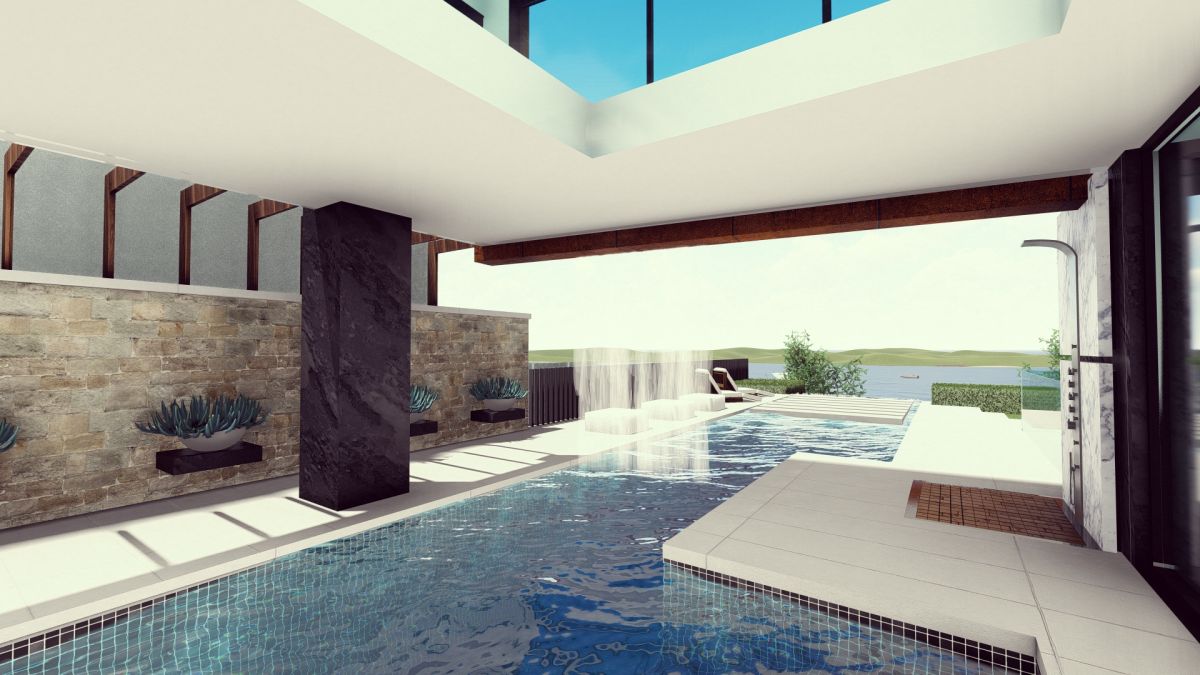
Tree scale should be tested against buildings, entertaining areas, paths and the mature planting composition—not selected in isolation.
Five Mistakes to Avoid When Choosing a Tree for a Small Garden
01
Looking only at height
Canopy width may have a greater impact on usable garden space.
02
Buying a tree because it looks small at the nursery
Nursery size tells you almost nothing about mature landscape scale.
03
Ignoring winter sunlight
A permanent evergreen canopy can make an already shaded courtyard much darker.
04
Using pruning to compensate for the wrong species
Repeatedly forcing a naturally large tree into a tiny footprint creates an unnecessary maintenance burden.
05
Forgetting what happens below the canopy
Consider roots, soil competition, leaf litter, furniture, paths and underplanting from the beginning.
For more compact-space planning advice, read Dapple's guide to making a small garden look bigger and our small and narrow block landscape design guide.
Frequently Asked Questions
What is the best small tree for a Sydney backyard?
There is no single best tree. Water Gum, compact magnolias, Crepe Myrtle, NSW Christmas Bush and selected citrus are useful options, but the right choice depends on canopy space, sunlight, soil, climate and the purpose of the tree.
What is a good native tree for a small Sydney garden?
NSW Christmas Bush 'Albery's Red' is particularly useful where width is restricted, while Water Gum and Blueberry Ash provide taller but relatively narrow native canopy options.
What trees stay around 3 to 4 metres?
Japanese Maple can remain around four metres, Magnolia 'Little Gem' around four metres, and dwarf citrus around two to four metres depending on cultivar and growing conditions. Always confirm the mature size of the exact cultivar being purchased.
Can you grow a tree in a pot permanently?
Yes, selected compact trees such as dwarf citrus, some maples, bay and miniature frangipani can live for many years in sufficiently large containers when drainage, irrigation, nutrition and root space are managed correctly.
Landscape designer perspective
A Small Garden Still Deserves a Real Tree
One of the easiest mistakes in compact landscape design is becoming so afraid of scale that every plant is kept low.
A well-chosen tree adds something groundcovers and shrubs cannot: canopy, vertical scale, shade, seasonal change and a stronger relationship between the garden and the architecture.
The goal is not to find the smallest possible tree.
It is to select the largest useful tree that the site can comfortably support at maturity.
Dapple Landscape Design combines spatial planning and horticultural knowledge when selecting trees for Sydney properties, considering mature canopy, site orientation, privacy, root space, drainage, maintenance and how each tree contributes to the complete landscape.
Explore Dapple's tree Plant Finder, browse our complete Plant Finder, view completed landscape projects, or learn more about small garden design in Sydney.
Not Sure Which Tree Fits Your Garden?
Dapple can develop a planting plan around your garden's available space, sunlight, architecture, soil conditions and long-term maintenance requirements.
Discuss Your Garden Call 1300 DAPPLE
1300 327 753