Council guide · Blue Mountains
Landscape plans for Blue Mountains DAs
DCP 2015 Part C, bushfire-prone land and bushland edges, from a designer based in Springwood.
01 / 03 · Swipe →
Gardens that work with your APZ
Planting, mulch and layout designed around Planning for Bush Fire Protection 2019.
02 / 03 · Swipe →
Levels, walls and drainage, designed together
Sloping Mountains blocks need the hardscape resolved before the planting.
03 / 03 · ← Swipe back
● Guide
Rules current to 25 November 2026 · Prepared by Dapple Landscape Design
In the Blue Mountains, landscaping is assessed under Blue Mountains DCP 2015. Part C (Environmental Management) holds the landscaping, bushfire, weed, tree and vegetation controls, and Part I lists the documents to lodge. A landscape plan is expected with almost every development application. On bushfire-prone land, your planting and layout must also work with the asset protection zone required under Planning for Bush Fire Protection 2019.
Part C
of DCP 2015: landscaping, bushfire, weeds, trees and water
Part I
lists submission requirements for your DA
PBP 2019
the NSW RFS standard for landscaping on bushfire-prone land
Dapple Landscape Design is based in Springwood, in the Lower Blue Mountains. This is our home council, and the mix of steep blocks, bushland edges and bushfire controls is what we design for every week.
01 —
Which Blue Mountains controls apply to your lot
Blue Mountains DCP 2015 applies to land zoned under Blue Mountains LEP 2015. The parts that matter most for landscaping are:
DCP 2015 part / What it covers
Part C: Environmental Management
What it covers
Biodiversity, weeds, landscaping, bushfire, trees and vegetation, and water management
Part I: Submission Requirements
What it covers
The reports and documents that may need to accompany your DA
Part J: Guidelines
What it covers
Detailed advice on preparing certain documents
Part H (notification) was repealed in November 2025; public participation is now covered by Council's Community Participation Plan. Council also exhibited Amendment 7 to DCP 2015 from 14 April to 28 May 2025, so check you are using the current version.
02 —
What to lodge with a Blue Mountains DA
A guide published by the Blue Mountains Conservation Society summarises what Council typically asks for. Use it as a starting point, then confirm against DCP Part I:
✓
A Statement of Environmental Effects and a Site Analysis Plan, which all DAs require
✓
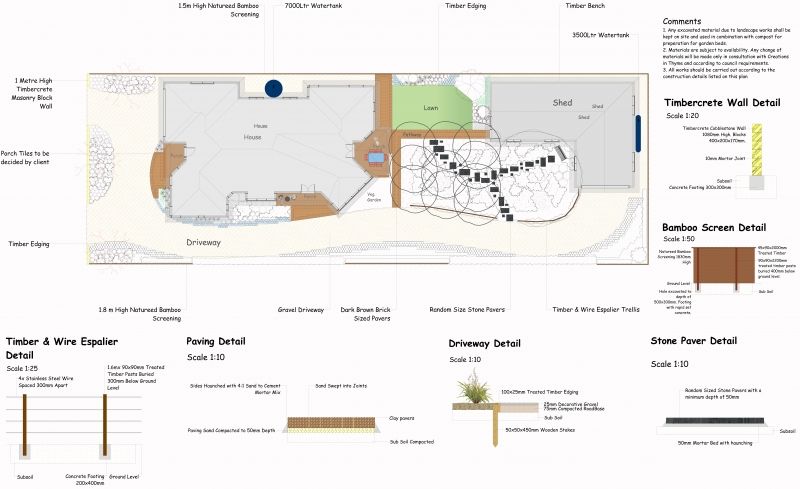
A landscape plan, which is required for almost all development proposals and shows how existing native vegetation will be retained and managed
✓
A Vegetation Management Plan where the development (including an asset protection zone) requires native vegetation to be removed, prepared by a qualified environmental consultant or bush regenerator
✓
A Weed Management Strategy where environmental or noxious weeds listed in Part C are present on site
✓
A bushfire threat assessment and a statement on asset protection zones if the lot is mapped as bushfire prone
✓
An Erosion and Sediment Control Plan where the area disturbed during construction is between 50 m² and 2,500 m²
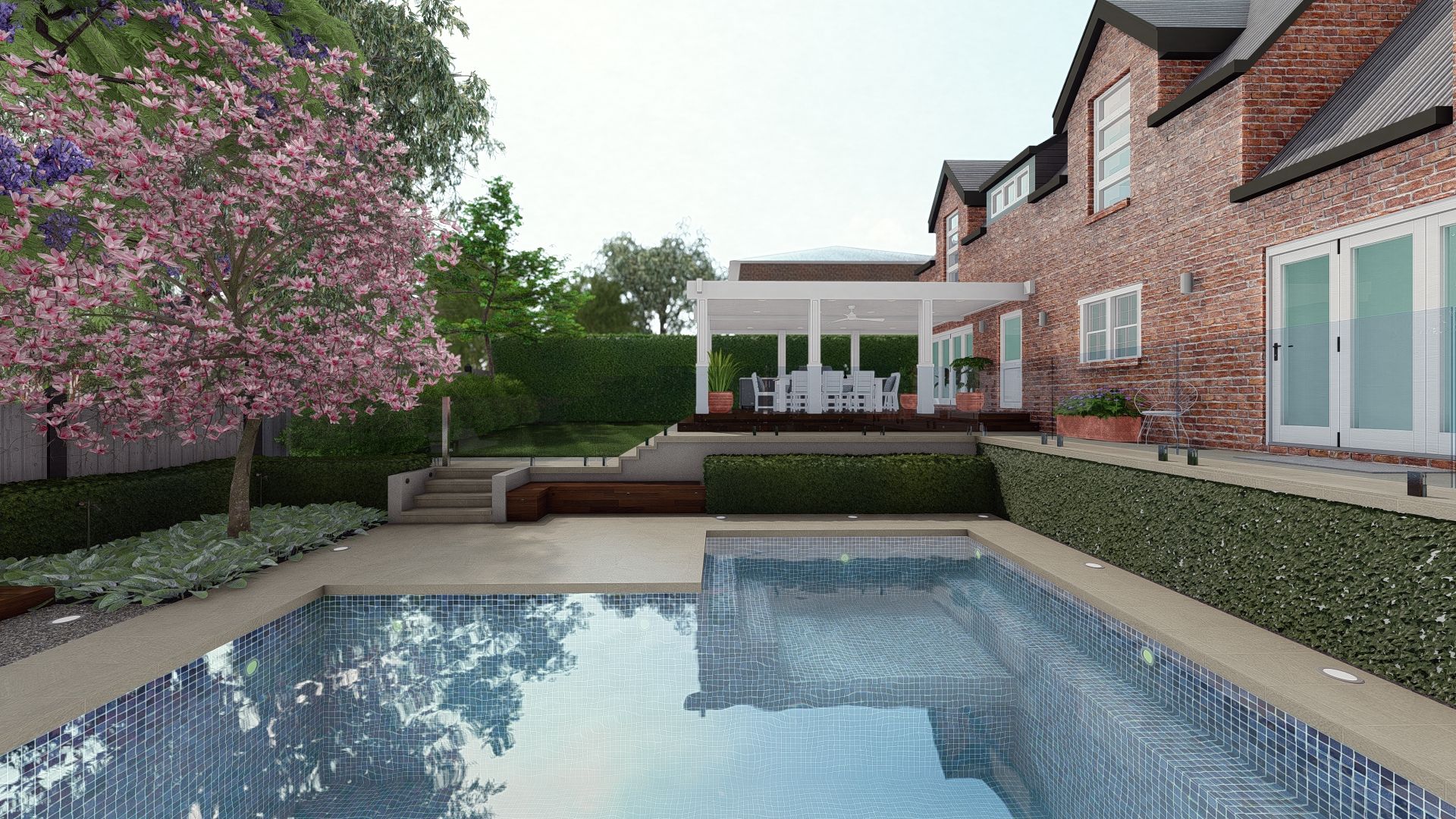
A Dapple project in Glenbrook. Mountains gardens have to balance outdoor living, slope, bushland character and bushfire protection.
03 —
Landscaping on bushfire-prone land in the Mountains
Much of the Blue Mountains is mapped as bushfire prone. Development on that land is assessed against the NSW Rural Fire Service's Planning for Bush Fire Protection 2019, which sets the asset protection zone (APZ) around buildings. Your landscape plan needs to support that zone, not work against it.
Keep the inner protection area around the house open and managed, with low-flammability planting and non-combustible mulch close to buildings.
Use paths, paving, lawn and retaining walls as breaks between planting and the house.
Avoid continuous fuel: separate shrubs from tree canopies so fire can't climb.
Locate woodpiles, timber structures and combustible features away from the house.
For a complying development certificate on bushfire-prone land, a Bushfire Risk Assessment Certificate is needed before the CDC can be issued. Some development types, such as subdivisions and tourist accommodation, also need a Bush Fire Safety Authority from the NSW Rural Fire Service. Our bushfire-resistant landscape guide covers plant choice in more depth.
04 —
Bushland edges, native vegetation and weeds
Many Mountains lots back onto national park and the Greater Blue Mountains World Heritage Area. Council's controls aim to keep bushland intact and stop garden plants escaping into it. Expect your plan to show:
Which existing native trees and vegetation will be kept, and how they'll be protected during construction
Removal and ongoing control of listed weeds
Planting that suits the local bushland, avoiding species that could spread into it
Lots on the bushland fringe can also be subject to Principal Development Area controls under LEP 2015, which affect where development and associated works can go. Check your planning certificate and Part C before finalising the layout.
05 —
Designing for Blue Mountains sites
Steep slopes, shallow sandstone soils, frost in the upper Mountains and heavy summer storms all shape a workable plan. Retaining walls, drainage and level changes usually need to be designed together. See our guide to landscape design for sloping blocks in the Blue Mountains.
On sloping Mountains blocks, the hardscape plan (levels, walls, paths) often matters as much as the planting.
Fixed-quote landscape plans
Building in the Blue Mountains?
We're based in Springwood and prepare landscape plans for Blue Mountains DAs and CDCs, including bushfire-prone sites.
Frequently asked questions
Do I need a landscape plan for a DA in the Blue Mountains?
Almost always. A landscape plan is expected with almost all development proposals, showing how existing native vegetation will be retained and managed. Check DCP 2015 Part I for your development type.
Where are the Blue Mountains landscaping controls?
In Blue Mountains DCP 2015, Part C (Environmental Management), which also covers bushfire, weeds, trees and vegetation, and water management. Submission requirements are in Part I.
How does bushfire-prone land affect my garden?
Your landscaping must work with the asset protection zone required under Planning for Bush Fire Protection 2019. That affects plant choice, spacing, mulch and where you put structures and woodpiles.
Do I need a vegetation management plan?
If your development, including its asset protection zone, requires native vegetation to be removed, Council will usually want a Vegetation Management Plan from a qualified environmental consultant or bush regenerator.
Sources and review
Also referenced: Blue Mountains Conservation Society, Planning and Development Resource Kit: Development approval in the Blue Mountains (current at 30 June 2023); NSW Rural Fire Service, Planning for Bush Fire Protection 2019; Blue Mountains City Council, Proposed Amendment 7 to DCP 2015 (exhibited April–May 2025).
JS
Prepared by Dapple Landscape Design, led by designer Julian Saw (member, Landscape Design Institute). This guide is general information, not planning or legal advice. Councils amend their development control plans regularly, so confirm the current controls for your lot with council or your certifier before lodging.